




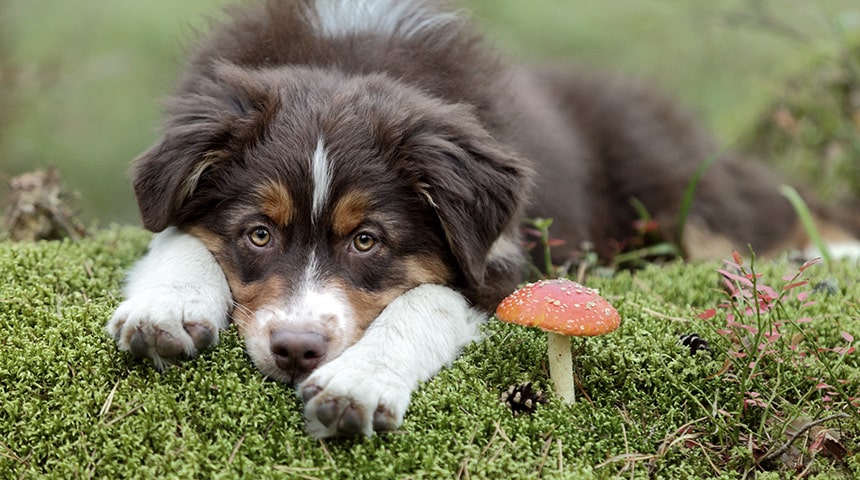
Wild mushrooms:
Taking a walk through the forest with your pet is one of life's simple pleasures. The fresh air, the chance to spot wild animals, and the beauty of Quebec’s flora all make for a wonderful experience. However, as many pet owners know, not all mushrooms are as harmless as they appear, and this applies to our furry friends as well!
While we enjoy exploring nature, wild mushrooms can be dangerous—some are highly toxic to pets. Ingestion of even a small amount of a poisonous mushroom can cause severe poisoning. So, it’s important to be aware of the risks and take precautions when venturing into the woods or other areas where mushrooms grow.
Compost:
However, it's not just wild mushrooms that pose a threat to pets. Your household compost can be a hidden danger. As food decomposes in your compost pile, fungi and yeasts begin to grow, and these can be toxic to pets. Dogs and cats may be tempted to scavenge through compost piles, and while it may seem harmless, ingesting decomposing food can lead to serious health issues.
To keep your pet safe, we recommend blocking access to compost piles—this can help prevent not only the risk of poisoning from fungi, but also the potential ingestion of foreign objects like bones, corncobs, or other harmful debris.
If you suspect that your pet has eaten a mushroom or ingested something from a compost pile, look out for the following signs:
- Hypersalivation (excessive drooling)
- Severe muscle tremors or stiffness
- Vomiting or diarrhea
These symptoms can indicate that your pet has ingested something toxic, and quick intervention is crucial. The sooner your pet receives care, the better the chances of a positive outcome.
What to do if you suspect poisoning
If you notice any of these symptoms and suspect your pet has consumed toxic mushrooms or compost, do not wait for symptoms to worsen. Contact an emergency veterinary center immediately for guidance and treatment. Time is of the essence when it comes to poisoning, and fast action can save your pet’s life.