

Clinique Vétérinaire Cimon • Loretteville

Your pet is a member of your family and ours; it is a best friend, and even a confidant!

That's why our dedicated team of veterinarians, technicians and support team is always there, ready to care for your pet and give you the most appropriate advice to ensure its well-being and health.

Hôpital Vétérinaire des Laurentides

Your pet is a member of your family and ours; it is a best friend, and even a confidant!

That's why our dedicated team of veterinarians, technicians and support team is always there, ready to care for your pet and give you the most appropriate advice to ensure its well-being and health.
Three Activities to Do With Your Dog This Fall

You have closed the pool for the winter, the leaves are starting to fall, the pumpkins will soon be lounging in front of your home for Halloween ... in short, summer is over! But the cooler weather is not a reason to stay home with your pet. Here are 3 activities that will make you go out and enjoy the beautiful autumn colours.

  1. Fall hiking in natural parks:

Why not enjoy the warm autumnal scenery while going on a hike? Several national parks allow our canine friends to walk on their trails. You can check which one right here. Something to thoroughly enjoy the beautiful foliage colours of the season!

  1. Canicross:

Are you a runner or want to get back in shape after the summer? Then, canicross is for you! Practiced for more than 30 years in Europe, the sport arrived in Quebec about ten years ago. It's simple: the dog becomes your running partner. With an elastic harness, your dog will guide you while running in front of you. You control the run’s intensity with your straps, collaborating with your doggie. Races are organized every week this fall, but you can also practice the sport in your neighbourhood by getting a harness especially designed for this purpose. We do recommend that you register for an introductory course, because this activity is more technical than it looks!

  1. Picking pumpkins and squash:

The picking of these autumnal gourds is pleasant for little ones and  big ones alike, and even the dogs ! They will be able to frolic in the fields and through the trees and enjoy the outside air. In addition, at the end of the day, you can prepare delicious soups to warm you up!


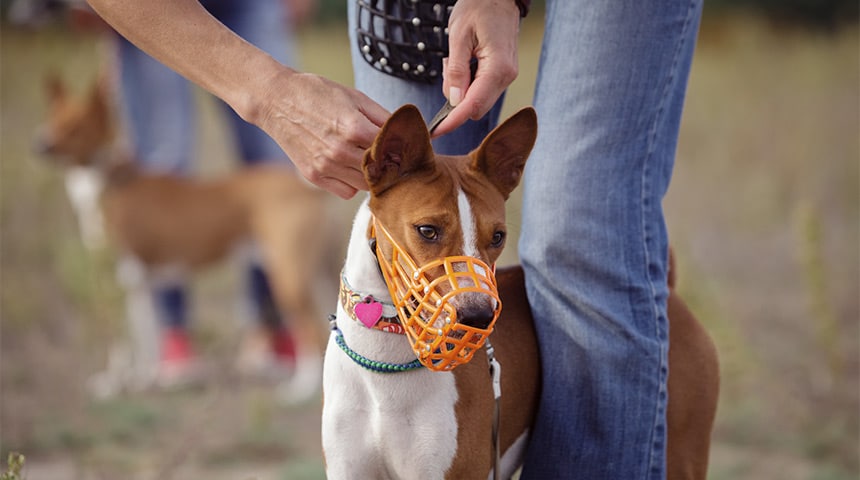
The Basket Muzzle : a Tool, Not a Constraint

When we hear about a muzzle, several images come to mind. However, this tool would benefit from being used in different contexts. A responsible owner must ensure that the environment where the dog is located is safe for everyone, whether the elderly, young children or people with health issues are present.

It is possible to use the basket muzzle to perform manipulations in a safe way, or to work on socialization with dogs or humans. If your dog is in a family context where there are many children, why not use it? It will give you peace of mind. You can also use it for a dog who tends to get into everything during parties, or when he's outside!

A gradual introduction of this tool is paramount, to bring your dog to make a positive association when he sees this accessory.

Step 1

  • Show him the muzzle (on the ground or on his cushion) and give him a treat.
  • Hide the muzzle without giving him a treat.
  • Repeat this exercise as often as necessary so that he associates the muzzle with food. He must be happy to see the object!

Step 2

  • Place a treat in the muzzle and present it to your dog.
  • If he takes the food, praise him!
  • Repeat this step several times.

Step 3

  • Show him the muzzle without putting treats in it. If he puts his nose in it, offer him his treat!
  • You must alternate between step 2 and 3 as often as needed.

Step 4

  • Put a treat in the muzzle, let him put his nose in it and fasten the strap without tightening it.
  • Praise your dog and remove the muzzle immediately.
  • If he shows signs of stress, do not insist and go back to the previous step.

Step 5

  • Repeat the previous steps, but this time tighten the strap by gradually.
  • Praise your dog and remove the muzzle immediately.
  • If he shows signs of stress, do not insist and return to step 3.

Keep in mind that there must be a positive association and that you should never force your pet to put it on. Do short sessions, repeat them often, and play with your dog so that he becomes comfortable with having something on his muzzle.

Compared to the nylon muzzle (used for short durations), this one allows the dog to pant (perfect for summer!), drink, eat treats and express themselves. The basket muzzle is available in several shapes and colors. In addition, nothing prevents you from adding a little touch of whimsy!


Encouraging Your Cat to Drink Water

Generally speaking, our felines are not big drinkers. It is important to make sure they are well hydrated in order to maintain good urinary tract health. Some will be more “choosy” depending on the type of water received or the container.

By offering high-quality canned food, you can increase your cat's water intake. Gradually, you can add a little warm water to make a broth. Some cats will greatly appreciate it!

Here are some tips to help your companion drink more water:

  • Always leave a trickle of water for tap enthusiasts, especially on days when you have to leave for a long period of time.
  • Serve fresh water every day, as they seem aware of the water’s temperature and taste. Some of them like to drink a little water after a few bites, so be sure to rinse out their water bowl when you serve their meal.
  • Keep a good level of water in the bowl, because some cats don't like their whiskers rubbing against the walls.
  • Some cats will be motivated to drink more water if you add a drop or two of tuna or clam juice. If so, make sure you have a second bowl of water.
  • For the more finicky drinkers, you could chill tap water to improve the taste, add ice cubes, serve Brita-filtered water, distilled water or bottled water.
  • Have several bowls around the house and use bowls of different materials such as ceramic, metal or plastic. Choosing a transparent bowl could encourage him to drink more, since he will see the water level. If your cat tends to knock it over, opt for a bowl with a rubber base.
  • Offer him a water fountain! Having circulating, cooler water will encourage your cat to drink. This could be an interesting alternative for cats that drink directly from the tap.
  • Keep food and water bowls away from litter boxes.


Understanding and Optimizing Scratching Posts


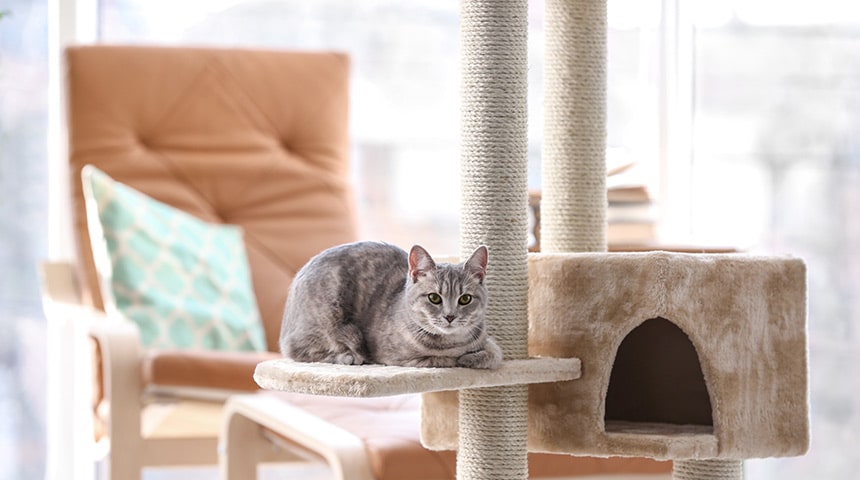
Scratching posts are essential tools for feline well-being, but they're often misused or underutilized. Cats, being the complex creatures they are, have specific preferences when it comes to scratching surfaces. Understanding these preferences can help you choose and position the right scratching post to encourage its use.

Key Factors for Optimal Scratching Post Use:

  1. Material and Texture:
    • Variety is Key: Offer a variety of textures, such as sisal, cardboard, or carpet, to cater to different preferences.
    • Consider Your Cat's Personality: Some cats prefer rough textures, while others may lean towards softer options.
  2. Placement:
    • Strategic Positioning: Place the scratching post in a high-traffic area, like near a favorite lounging spot or a frequently used doorway.
    • Avoid Isolated Corners: Cats often prefer scratching in areas where they can survey their territory.
    • Consider Vertical and Horizontal Options: Some cats prefer vertical scratching posts, while others may enjoy horizontal ones.
  3. Height and Stability:
    • Allow for Stretching: A taller post allows cats to fully extend their bodies while scratching.
    • Ensure Stability: A wobbly post can deter cats from using it. Opt for a sturdy base or anchor the post to a wall.

Redirecting Unwanted Scratching Behavior:

If your cat is scratching furniture, you can discourage this behavior by:

  • Making the Furniture Unattractive: Use double-sided tape or a citrus-based deterrent spray.
  • Placing the Scratching Post Nearby: Position the post near the furniture to encourage redirection.
  • Positive Reinforcement: Reward your cat with treats or praise when they use the scratching post.

If you have any further questions or concerns, feel free to consult with a veterinary professional.


Training Your Puppy

Adopting a puppy opens the door to a great adventure! It is essential to be patient in the first weeks. Give your puppy time to learn how to live with his new family!

Here are some points to remember for his training to go smoothly:

  • Choose a short name that does not sound like a command.
  • Say his name often and reward him when he looks at you. Also, teach him to sit before each interaction, whether to feed him, play or cuddle him.
  • The command “come” should be part of learning. This will allow you to recall him quickly in inappropriate situations. At home or at the park, just do it for fun or to give him a treat; otherwise he'll associate the command with putting on the leash.
  • Alternate toys regularly and find new games. Whether he’s big or small, activity goes a long way in preventing behavioral problems. Avoid confrontational games (ex: tug of war).
  • Offer him chewing periods on a regular basis. In addition to keeping him busy, you will take care of his teeth.
  • Regularly handle his ears, mouth and paws (including the claws). This will make ear cleaning, tooth brushing and nail trimming more enjoyable.
  • To facilitate potty training, choose a specific place. This way, it will be easier for him to associate that he has to do his business there (ex: dive or lawn).
  • Socialization, positive reinforcement, and frequent outings are key to keeping your pet happy!

Your dog will often communicate with non-verbal language. It is therefore important to know his calming signals.

Congratulations on adopting your new companion!


Hôpital Vétérinaire Victoria • Ste-Julie

Your pet is a member of your family and ours; it is a best friend, and even a confidant!

That's why our dedicated team of veterinarians and technicians is always there, ready to care for your pet and give you the most appropriate advice to ensure its well-being and health.