
Let’s Go Outside!

Summer is just around the corner and Kitty is starting to crave some freedom? Do you wish for your cat to go outside and "let loose" so that he can be calmer at home? Whether the idea comes from you or your cat, there are a few things to keep in mind before letting Kitty out.

First of all, make sure your cat has appropriate identification. Whether it is with a custom tag or a medal associated with the rabies vaccine, for example, make sure that the information registered enables us to contact you if your cat gets lost. You should know that it is also possible to have a microchip implanted under your cat's skin. This microchip, unique to your cat, can only be read with a special reader available at the SPA and veterinary clinics.

You should be aware that there are more dangers for an outdoor cat than one that stays inside. He will encounter many animals, some of which may be less friendly and could inflict injury. For example, a bite can lead to the transmission of certain diseases such as feline leukemia, feline AIDS and rabies. Other more contagious diseases can also threaten Kitty if he is not adequately protected. There are vaccines against most of these viruses, so ask your veterinarian for a vaccination plan adapted to Kitty's lifestyle!

A favourite activity of cats who go outside is, without a doubt, hunting! In fact, Kitty will gladly bring you some trophies back! But hunting does not have only positive aspects; because most preys are carrying parasites, often in the form of larvae encysted in their muscles. These larvae finish growing in your cat's body, which then becomes host to "intestinal worms". There are several types of parasites, and some are transmissible to humans. Therefore, it is important to have a stool analysis done every year and to give the appropriate deworming treatments.

In addition to internal parasites, your cat can also become a host to external parasites. Fleas, ear mites, body mites and ticks are among the parasites that can contaminate your environment, bite you, or even transmit certain diseases. It is crucial to protect your pet from these "invaders" during the summer months, from June to November.

In closing, keep in mind that despite the associated hazards, the outdoors offers your cat plenty of stimuli and places to explore that will satisfy her hunting and activity needs. She'll likely return home happy and relaxed.
Time for Medication – or Time to Fight?

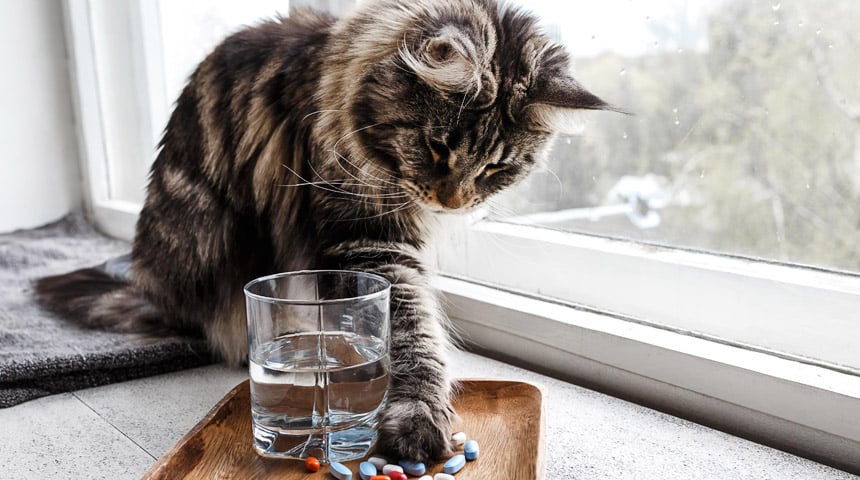
Kitty comes back from the vet and needs to receive medication? You start administering the medication and everything goes well after a few days! You may be tempted to stop the treatment because pill time turns into rodeo time with Kitty… Bad idea!

Studies have shown that a certain percentage of people do not follow the prescribed dosage and/or duration of treatment.

Here are a few mistakes observed over time:

  • Giving a double dose to make up a skipped dose
  • Giving a double dose in the morning instead of the normal dose morning and evening
  • Modify the dosage of a given product in decreasing doses


If your vet has taken the time to prepare a treatment plan, it is important to follow it! This plan takes into account the issue targeted and how long the product will be effective. Failure to follow the treatment plan properly can lead to poor results, adverse reactions and dissatisfaction with veterinary care…

If Kitty is very resistant to the pills, don't hide them in her food; she will most likely detect them. Not only will she not take them, but she may become suspicious of her food later on. You'll then have two issues to deal with!

There are alternative solutions:

  • Specially made treats to hide pills in
  • Pill launcher
  • Some medications are available in injection form


Make sure you understand Kitty's illness. Don't hesitate to ask questions if you don't understand why some of the medications have been prescribed. Ask for a treatment demonstration if necessary. Tell your veterinarian if you cannot keep to the dosing schedule. The treatment's success depends on it. It also prevents antibiotic resistance (when an antibiotic is involved). Keeping a treatment log can also be useful if several members of the household are involved in administering the medication.

However, tell your veterinarian if the medication seems to be poorly tolerated by your cat.

With proper management, Kitty will have every chance to get better!


How to Introduce a New Pet With Your Dogs and Cats

The arrival of a new cat or dog is often stressful, both for the new arrival and for the pets who already live in the home. Here are some tips for introducing this new pet with your dogs and cats:


Preparing for the Arrival of the New Cat or Dog

In order to promote a positive encounter between the new animal and your pets, it is essential to separate them for the first few days. This is especially true for cats: it is important to give them time to adapt to their new environment before meeting their new companions. Provide a safe room where your new pet can live for the first 24 to 48 hours. It can be helpful to change rooms for your pets before you have them meet for the first time, so the new pet can explore the whole house.


Show Available Resources

One of the first steps to take after releasing a cat or dog into their new environment is to show them the location where they can relieve themselves. It is also essential to make fresh water and food easily available, safe from competition with other animals in the house.


Pheromone Diffusers

There are products available in veterinary stores that promote animal cohabitation and help reduce stress in pets. Among other things, some products use synthetic pheromones to generate a soothing and harmonious environment. Find out more from the store of your veterinary clinic.


Supervised Meetings

After the first days of adaptation to the environment, you may proceed with the meeting between the current house pets and the newcomer. Do short, supervised, remote encounters first. Then, depending on how each animal behaves, allow them to gradually get closer. It is important that these meetings be voluntary at all times. Let the animals interact at their own pace.


Positive Encounters

To make every experience positive, reward them with their favorite treats. As well, promote play between your pets, which is always joyful and often allows harmonious relationships.


Disease Prevention

Make sure your new companion is adequately protected so as not to expose your pets to pathogens. Consult your veterinarian for vaccination, screening and deworming recommendations. This also applies to your existing pets, who will now be exposed to a new animal that could potentially carry certain pathogens.

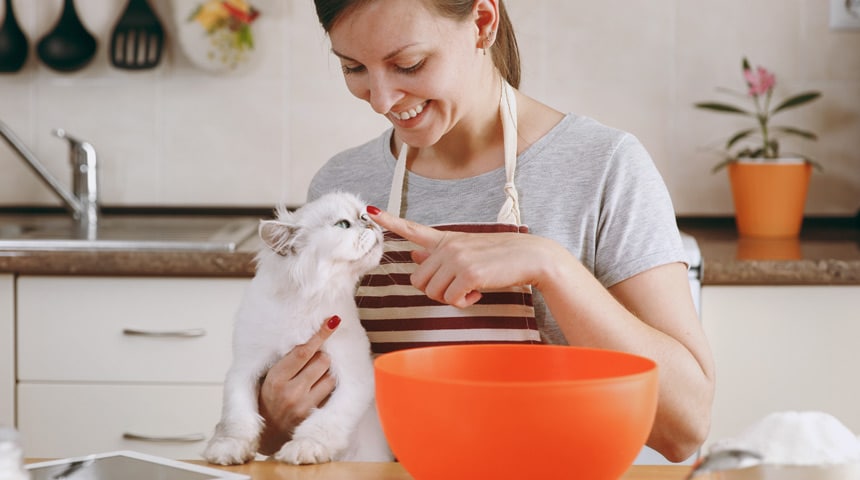
Baking Treats for Your Cat

Giving treats to your cat is one of the most common ways to spoil him. However, some health conditions require exclusive therapeutic food and restrict the use of commercial treats!


Here are two easy recipes to make at home for your cat, using canned or dry food, regardless of his medical condition (weight loss, diabetes, hyperthyroidism, food allergies, etc.). Bon appétit, Kitty!


From canned cat food:

  • Open the can and shake the loaf of cat food out of the can.
  • Cut the loaf into 6 mm (1/4") thick slices, and then cut the slices into bite-sized pieces.
  • Bake the cat treats in a microwave oven on high for approximately 2½ to 3 minutes.
  • Once cooked, treats can be stored in the refrigerator for 5 to 7 days. After this time, throw away any leftovers.
  • Homemade treats should not exceed 10% of your cat’s total daily intake, as heat alters the food’s nutritional values.
  • Do not freeze the homemade treats.

To bake in a conventional oven, place pieces on an ungreased cookie sheet and bake in the oven at 175ºC (350ºF) for approximately 30 minutes or until crispy.


From dry food:

  • In a blender, add 460 ml (2 cups) of dry cat food and grind into a powder.
  • Pour powder into a mixing bowl and gradually add about 230 ml to 290 ml (1 to 1¼ cups) of water, stirring until it forms a dough consistency.
  • Shape into individual "treats" or "cookies" and flatten the dough using the back of a spoon (the cookies will not flatten like standard "people cookies" do).
  • Place treats on an ungreased cookie sheet and bake in the oven at 175ºC (350ºF) for approximately 30 minutes or until crispy.
  • Once cooked, treats can be stored in the refrigerator for 5 to 7 days. After this time, throw away any leftovers.
  • Homemade treats should not exceed 10% of your cat’s total daily intake, as heat alters the food’s nutritional values.

Source: http://www.hillspet.ca/en-ca/cat-care/how-make-healthy-treats-home-ktn.html


Is a Cat Really for Me?

Have you fallen for the adorable kitten in the shop window? A stray cat keeps coming back to see you? Cats are unrivalled charmers - they know how to make us fall in love! However, before giving in to love at first sight, it’s advisable to ask yourself what kind of lifestyle you could offer a cat, what your expectations and needs are, and what kind of budget you can afford.

Here are a few questions you should ask yourself:

  • Do you have a busy schedule? Will you have time to dedicate to your little protégé?
  • Are you dreaming of a fluffy kitten like those featured in those toilet paper commercials? First of all, don’t forget that all baby kittens turn into adult cats! You should also be aware that a long-haired cat will require regular, deep brushing to avoid becoming thickly matted – in which case, the cat may need to be shaved! As well, a “flat-faced” cat will require daily eye cleaning.
  • Do you have leather furniture? It may fall prey to Kitty’s sharp nails. Adopting a cat also means making compromises!
  • Can you afford it? The first year, Kitty will need several vaccinations, neutering and deworming treatments. Your vet’s general examination may reveal surprises such as fleas, ear mites, ringworm, or a viral disease. You’ll be glad you had the cat checked BEFORE you brought it into your home! It’s a wise decision to budget for contingencies... they can add up your health care costs!

Once you have weighed the pros and cons, you can make an informed choice. Keep in mind that you are responsible for those you tame!


Oh No… the Cat Peed on the Bed!


The horror! You discover that your cat has urinated in the middle of the bed. When you have recovered from the initial shock, here are a few things to check:

  • Under which circumstances did this happen? Was there a recent stressful event?
  • Is the litter box kept clean and odour free?
  • Has your cat been behaving normally or have you noted changes in his/her behavior or overall health?
  • Does he/she urinate a lot more, or a lot less than usual?

Urinating out of the litter box can indicate an underlying a medical problem. We would recommend having a physical exam and urinalysis performed by your veterinarian. Bladder inflammation, urinary crystals, diabetes, or kidney failure are among the medical conditions that could explain this "bad" behaviour. If a physical exam and diagnostic testing do not reveal any medical abnormalities, your cat may be exhibiting signs of a behavioural issue.

In addition, it It is very important to keep the litter box spotless! We recommend that the number of litter boxes in the home be equal to the number of cats + 1. It is preferable to use a litter box without a cover, filled with unscented. litter. The soiled litter must be emptied every day, and the box itself should be cleaned thoroughly once a week and replaced yearly. Choose a location that is quiet and easily accessible; we do not recommend placing it next to a noisy furnace or a busy passageway!

Despite normal test results and perfect litter box management, your cat may continue to urinate in inappropriate places. Your veterinarian may suspect a behavioral issue and potential treatments will be discussed. Therapeutic approaches include the use of synthetic hormones, milk protein hydrolysates, antidepressants and environmental enrichment. We will explore this topic  in greater detail the following article.

When cleaning up urine or feces, it's important to act quickly and use the right products to neutralize odors. Avoid bleach, as its strong scent can attract your cat back to the same spot and it's not the best choice for eliminating pet odors. Instead, opt for enzymatic cleaners specifically designed for pet accidents to effectively neutralize odors and prevent repeat occurrences.

For any questions or concerns, do not hesitate to contact us!


Hôpital Vétérinaire du Boisé

Your pet is a member of your family and ours; it is a best friend, and even a confidant!

That's why our dedicated team of veterinarians, technicians, assistant technicians and receptionists is always there, ready to care for your pet and give you the most appropriate advice to ensure its well-being and health.

Bureau Vétérinaire Côté

Your pet is a member of your family and ours; it is a best friend, and even a confidant!

That's why our dedicated team of veterinarians, technicians, assistant technicians and receptionists is always there, ready to care for your pet and give you the most appropriate advice to ensure its well-being and health.