




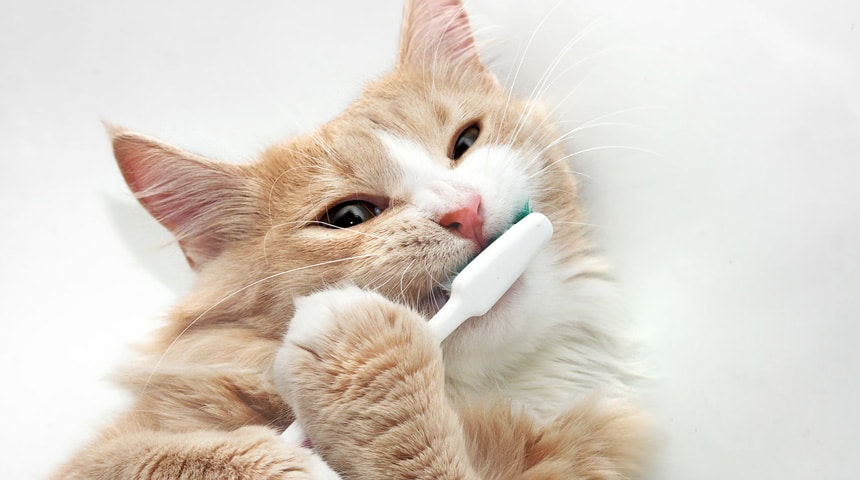
Bad breath in cats is often more than just an unpleasant odor; it can be a sign of periodontal or gum disease, typically caused by the buildup of plaque and tartar. Fortunately, you can prevent oral health issues with a simple and enjoyable dental care routine. Here’s how to keep your cat’s teeth clean and healthy.
Tooth brushing: A Simple Routine for a Healthier Smile
- Use Pet-Specific Toothpaste: Always use toothpaste formulated for cats. Never use human toothpaste, as it can be harmful to them.
- Introduce the Toothpaste: Let your cat taste a small amount of the toothpaste when they’re calm and relaxed. This will help them get used to the flavor.
- Start Slow: Apply a small amount of toothpaste to your finger or a finger toothbrush. Gently massage your cat's gums and the front teeth in a circular motion. Start with just a few seconds and gradually increase the time and coverage.
- Use a Pet Toothbrush: Once your cat gets used to the routine, switch to a soft toothbrush designed for pets. This will allow you to clean their teeth more effectively.
- Focus on the Outer Surface: You don’t need to brush the inside surface of the teeth (next to the tongue). Brushing the outer surface is sufficient for maintaining good oral health.
Ideally, aim to brush your cat’s teeth every day. Keep the experience positive by speaking to them gently and rewarding them with a treat afterward.
Professional Dental Exams: Annual Check-ups Are Key
Just like humans, cats need regular dental exams. We recommend an annual visit to the veterinarian for a professional dental check-up. Our veterinary teams offer comprehensive dental care, including routine dental cleaning, dental radiology and extractions when needed.
Frequency of Dental Prophylaxis for Cats and Dogs Based on AAHA Guidelines
According to AAHA (American Animal Hospital Association) guidelines, the first dental prophylaxis (cleaning) for cats and dogs is recommended as follows:
- At 1 year of age for cats and small to medium-sized dogs.
- At 2 years of age for large breed dogs.
Frequency of Dental Prophylaxis:
- Small breed dogs (without brushing): Every 6 months
- Small breed dogs (with brushing): Annually
- Large breed dogs (without brushing): Annually
- Large breed dogs (with brushing): Every 2 years
- Cats: Annually
Regular dental care, including professional cleanings, is essential for maintaining oral health and preventing dental diseases in pets.
Why Oral Health Matters
Neglecting oral care can lead to serious dental problems. Without proper care, cats can suffer from painful conditions like infections, bleeding gums, and even tooth loss, all of which can drastically affect their health and quality of life.
At our hospital, we use the latest technology and specialized instruments for feline dentistry. Our skilled veterinary team provides the highest standard of dental care to keep your cat’s mouth—and overall health—in top shape!