
Take Care of our Paws!

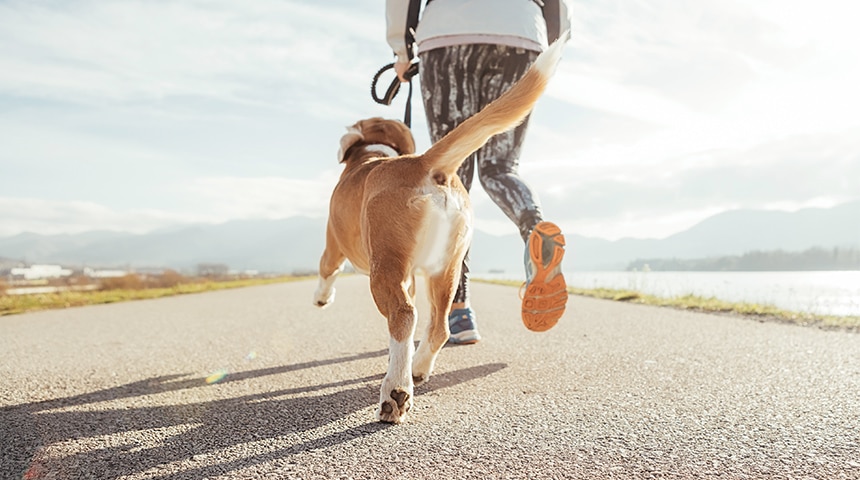
Summer is here and hot days are ahead. Beware, however, as these high temperatures can also affect your pet’s health. Scorching surfaces such as asphalt can inflict severe burns on your companion’s paw pads. On a sunny day, this type of surface can become much hotter than the surrounding air.


Here’s an example of temperature differences between the asphalt’s surface and the ambient temperature:

Ambient temperature ======˃ Asphalt

25 °C  ======˃  52 °C

30 °C  ======˃  57 °C

31 °C  ======˃  62 °C

Before going for a walk, we recommend that you do the hand test. Place your hand on the sidewalk and if you can’t tolerate its heat for more than 30 seconds, it means that it’s too hot for your dog as well. In this case, go for walks in the early morning or late evening, when the temperatures are cooler. If you don’t have the choice of walking your dog in the middle of the day, we recommend that you have them walk on grass, or use forest trails. There are also walking boots for dogs, made to protect their footpads.

If your dog, or even your cat, shows signs of burns on their paw pads, contact us quickly to book an appointment.


Danielle P., TSA

Hôpital Vétérinaire Blainville

Clinique Vétérinaire de Beaumont

Your pet is a member of your family and ours; it is a best friend, and even a confidant!

That's why our dedicated team of veterinarians, technicians, assistant technicians and receptionists is always there, ready to care for your pet and give you the most appropriate advice to ensure its well-being and health.

Clinique Vétérinaire de la Montérégie

Your pet is a member of your family and ours; it is a best friend, and even a confidant!

That's why our dedicated team of veterinarians, technicians, assistant technicians and receptionists is always there, ready to care for your pet and give you the most appropriate advice to ensure its well-being and health.

Hôpital Vétérinaire de la Montérégie

Your pet is a member of your family and ours; it is a best friend, and even a confidant!

That's why our dedicated team of veterinarians, technicians, assistant technicians and receptionists is always there, ready to care for your pet and give you the most appropriate advice to ensure its well-being and health.

Clinique Vétérinaire Cimon • Vanier

Your pet is a member of your family and ours; it is a best friend, and even a confidant!

That's why our dedicated team of veterinarians, technicians and support team is always there, ready to care for your pet and give you the most appropriate advice to ensure its well-being and health.

Clinique Vétérinaire Cimon • Loretteville

Your pet is a member of your family and ours; it is a best friend, and even a confidant!

That's why our dedicated team of veterinarians, technicians and support team is always there, ready to care for your pet and give you the most appropriate advice to ensure its well-being and health.

Help! My Pet Doesn’t Feel So Well…Is This an Emergency?

As with humans, an emergency with your pet can happen very quickly! But how do you know when a visit to the veterinarian is necessary? Here is a handy little guide to keep that contains all the answers you will need if the situation were to happen.

“Classic” Emergencies

Here is a list of recurring emergencies for which you can start treatment at home, and do not always require a visit to your veterinarian, depending on the case.

  • Diarrhea
  • Vomiting
  • Loss of apetite
  • Lameness
  • Eye Redness
  • Otitis
  • Hyper salivation
  • Itching

My Pet Has Diarrhea

The first question to ask yourself: could my animal have eaten something unusual such as a toy, a plant, a bone, grass, etc.? If the answer is yes, then a veterinarian must be consulted, since consumption of a foreign body could be the cause.

If the answer is no:

  • Give him easily digestible food sold by your veterinarian, or a homemade diet of white rice and cooked ground beef for at least 48 hours.
  • You can also add probiotics (sold over the counter) to his food for at least 7 days.

When is it time to consult?

  • No improvement after 48 hours
  • Blood in stool
  • General condition is deteriorating
  • Puppy less than 4 months old

My Pet Is Vomiting

Could my pet have eaten anything unusual such as a toy, plant, bone, grass, etc.? If the answer is yes, then a veterinarian must be consulted, since consumption of a foreign body could be the cause.

If the answer is no:

  • A complete fast of 8 to 12 hours is recommended.
  • If after fasting your animal has not vomited again, you can start introducing small amounts of water.
  • If he keeps the water down, you can introduce small amounts of easily digestible food.
  • If there is no change, you can go back to normal portions the next day.

Warning: prolonged fasting is not recommended for very small breeds of dogs, puppies, and kittens, as there is a risk of hypoglycemia. If you must fast them, apply corn syrup to their gums every 2 hours.

When to consult?

  • No improvement after 48 hours
  • Presence of blood
  • General condition is deteriorating
  • Puppy less than 4 months old

My Pet Isn’t Eating

The first question to ask yourself: is my animal interested in anything other than its food (treats, table food, etc.)?

Before consulting:

  • Offer him a “buffet” including 2-3 kinds of kibble, canned food, treats, small pieces of cooked chicken, cooked ground beef and cooked or canned fish.
  • Try heating the food to see what he likes best.
  • You can try to encourage him to eat by petting him or presenting the food in your hand.
  • Try to open its mouth and check if there is anything abnormal (broken tooth, wound, redness, etc.)

When to consult?

If the loss of appetite lasts more than 24-48 hours.

My Pet Limps

Did you see him make a wrong move, fall, hurt his paw? Have you noticed if he has a broken claw?

If so, apply hot and cold alternately and keep the animal at complete rest for at least 24-48 hours.

Caution: Never give Tylenol, Advil, Motrin or Aspirin, as these products are toxic to animals.

When to consult?

  • No improvement after 24 hours of complete rest
  • Your pet is panting, moaning or showing sharp pain
  • You see a wound and there is blood present

My Pet Salivates a Lot

Excessive saliva is called hypersalivation and can be a sign of nausea, mouth injury, toothache, or rabies.

When you notice that your pet is salivating a lot, has he just eaten something that tastes bad (plant, medication, etc.)?

Start by wiping his mouth and offering him some water.

Is his rabies vaccine up to date? Despite the sharp decrease in cases in Quebec, the disease is still present and unvaccinated animals are more at risk.

When to consult?

  • Hypersalivation persists for more than one hour
  • You notice a mouth sore or a broken tooth
  • Your pet refuses to eat
  • His rabies vaccine is not up to date

My Pet Has Red Eyes

Any eye problem deserves a visit to your veterinarian without delay.

Caution: Never administer drops purchased from a human pharmacy. Some products can cause severe allergic reactions.

If you have an Elizabethan collar in your home, put it on your pet as soon as possible. It will prevent him from scratching his eyes and making his problem worse.

My Pet Seems to Have An Ear Infection

Does your pet frequently shake his head? Does he constantly scratch his ears?

Start by cleaning his ears once a day for three days with a drying and antibacterial ear cleaner (available over the counter).

When to consult?

  • No improvement despite 3 days of treatment.
  • You notice blood or sores in his ear.
  • Redness intensifies after
  • It is a cat

My Pet Scratches A Lot

First step:

  • Put an Elizabethan collar on him to prevent further injury.
  • Check for fleas or ticks.
  • If there are no sores, you can try washing it with a soothing oatmeal shampoo every second day.

When to consult?

  • If you notice the presence of sores, pimples, scabs, or patchy hair loss.
  • The itching persists despite home care.

If you are unsure about the severity of your pet's symptoms, contact your veterinarian directly. Outside opening hours, you can communicate with one of our teams available 24 hours a day, 7 days a week:

Centre Vétérinaire Laval

Centre Vétérinaire Rive-Sud

Centre Vétérinaire Montréal

Please note that the advice in this article is provided for guidance only. Nothing beats the diagnosis of a veterinary examination as well as the treatments that will be offered to you.


Decontamination of a Poisoned Patient

In veterinary medicine, the primary treatment for exposure to a toxic substance is decontamination. The purpose of decontamination is to prevent further absorption and to remove the toxic substance from the animal's body. In most exposures, there is only a very short window of time to act. Providing a detailed account of events to the veterinarian is important, so that they can determine the type of exposure and substance. The timeline of events also allows the veterinarian to gauge whether decontamination is safe for the patient and whether it will be effective.


Ocular decontamination
Ocular decontamination usually involves flushing the patient's eye extensively to remove the toxic substance. This is often very difficult for the owner to do, as it involves restraining the animal in addition to handling a potentially painful and/or injured eye. Recommended eye rinses are lukewarm water and/or physiological saline (e.g., contact lens solution). In the case of exposure to a corrosive substance, the owner should attempt to rinse the eye before transporting the animal to the veterinary hospital. Rinsing for 15 to 20 minutes with warm water or a contact lens solution will reduce the damage from prolonged contact. The animal should also be prevented from rubbing its eye, either by restraining it or by fitting an Elizabethan collar, and then go immediately to the clinic for an ophthalmologic examination. If in doubt, contact a poison control centre to determine if the substance is corrosive or not. Corrosive injuries can be very serious and can lead to blindness.

If the exposure was to an irritating but non-corrosive substance, the owner can simply rinse the eye for 10 to 15 minutes. No ointment or ophthalmic medication should be applied. The eye should be closely monitored for signs of corneal abrasion or ulceration, including itching, redness, discharge, squinting and blepharospasm (eye held shut). Check with your veterinary clinic if any of these signs appear.


Skin decontamination
Skin decontamination is performed to prevent transcutaneous absorption and oral re-exposure to the contaminant (when the animal licks itself). It is essential that the owner and all veterinary personnel be physically protected with rubber gloves, waterproof aprons and face shields. It is important to inform clients of these precautions as soon as they contact the clinic. They should also be instructed to prevent the animal from licking itself during bathing and/or transport to the hospital. For oil-based substances (e.g., "Spot on" products), the animal should be washed with warm water and degreasing dishwashing detergent; it is important to lather and rinse thoroughly and repeatedly.

Animal shampoos, as well as the human kind, are not effective against oil-based substances.  

In addition, shampoos with added ingredients (e.g., insecticides, dandruff tar, antibiotics, antifungals, etc.) should not be used to avoid the accumulation of possible toxic effects. A cat exposed to pyrethrins may be treated for uncontrollable tremors before bathing, to prevent worsening of clinical signs and to facilitate bathing (sedation) for staff. For exposure to a caustic or corrosive substance, a gentle rinse with warm water for 15 to 20 minutes prior to the veterinary examination is recommended. The use of pressurized water jets, aggressive scrubbing of the skin, or the application of neutralizing agents should be avoided, as these may cause traumatic tissue damage or severe chemical reactions.


Gastrointestinal decontamination

In veterinary medicine, gastrointestinal decontamination (including induction of vomiting and/or administration of activated charcoal with a laxative) is considered the best practice to limit absorption and prevent extended exposure to potential toxins. However, it is important to consider the risks inherent in inducing vomiting as there are potential contraindications. It is also important to assess whether the benefits outweigh the risks. In all cases, always contact a veterinarian.


By Jo Marshall, TSAC et Justine A. Lee, DMV