




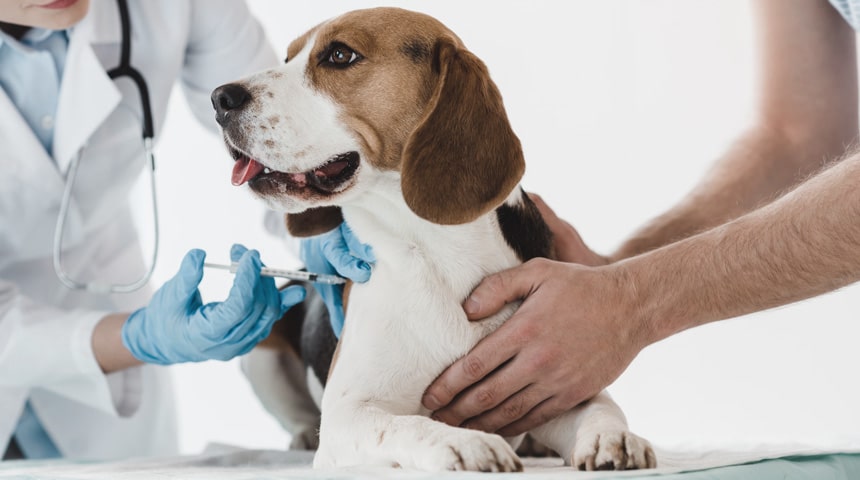
Why Vaccination Matters
Vaccination helps your dog develop immunity against severe or fatal diseases, preventing unnecessary suffering. Below is information on the various diseases your veterinarian will protect your dog against:
Vaccination Schedule for Puppies
Puppies should receive their first core vaccination starting at around 6-8 weeks of age. These vaccines protect against serious diseases such as distemper, hepatitis, parvovirus, leptospirosis and rabies. The initial series of vaccines will be administered with booster shots every 3 to 4 weeks until your puppy is 16 weeks old. After this, an annual check-up is recommended. At this time, your veterinarian will review your dog’s vaccination needs for the upcoming year.
If your dog will be attending boarding facilities, grooming services, or training classes, inform your veterinarian. In such cases, the vaccine against kennel cough (Bordetella) would be recommended.
- Core Vaccines (DHPP and Rabies):
Distemper (D): A multisystemic disease affecting various body systems. Symptoms include fever, diarrhea, respiratory issues, convulsions, and neurological problems. It is transmitted through air or contact with contaminated secretions and has a high mortality rate.
Infectious Canine Hepatitis (H or A2): Caused by an adenovirus, it can lead to gastrointestinal issues, fever, lethargy, and liver dysfunction. Transmission occurs through infected saliva, urine, or stool.
Parvovirus (P): A highly contagious and resilient virus that primarily affects the intestines. Symptoms include lethargy, fever, bloody diarrhea, vomiting, and dehydration. It is transmitted through contact with contaminated feces and can be fatal.
Parainfluenza (P): Causes an upper respiratory infection similar to kennel cough, with symptoms including a runny nose, cough, fever, and lethargy. It is transmitted through nasal secretions and saliva.
Rabies (R): A fatal disease affecting the central nervous system, transmitted through bites or contact with infected saliva. Symptoms include behavioral changes and paralysis. Rabies is zoonotic and vaccination is crucial for both pet and human safety.
Leptospirosis (L): Caused by bacteria transmitted by rodent and wild animal urine, affecting kidneys and liver. Symptoms include fever, weakness, and symptoms associated with liver or kidney disease. It can be transmitted through contaminated soil or water. It can also be transmitted to humans.
- Non-Core Vaccines:
Bordetella (B): Known as kennel cough, this disease affects the respiratory system and is spread through airborne droplets or contact with contaminated surfaces. Symptoms include persistent honking cough, nasal discharge, and fever.
Lyme Disease: Caused by the bacterium Borrelia burgdorferi, transmitted by ticks. Symptoms include fever, limping, and lethargy. Tick control is key and in some cases, vaccination will also be recommended.
Vaccination Schedule
Core Vaccines (DHPP): Start at 6-8 weeks, with booster shots every 3-4 weeks until 16 weeks old. Annual boosters are recommended thereafter, with a three-year interval for subsequent doses.
Leptospirosis: Initial vaccine at 8-10 weeks with one monthly booster and an annual booster thereafter.
Bordetella: Administered intranasally or subcutaneously, with annual boosters for intranasal and monthly for subcutaneous, followed by annual doses.
Rabies: First administered at 12 weeks, with annual boosters and every three years thereafter.
Lyme Disease: Initial vaccine with a monthly booster, then annual doses.
Please note that some factors may alter this vaccine schedule and will be discussed by your veterinarian.