




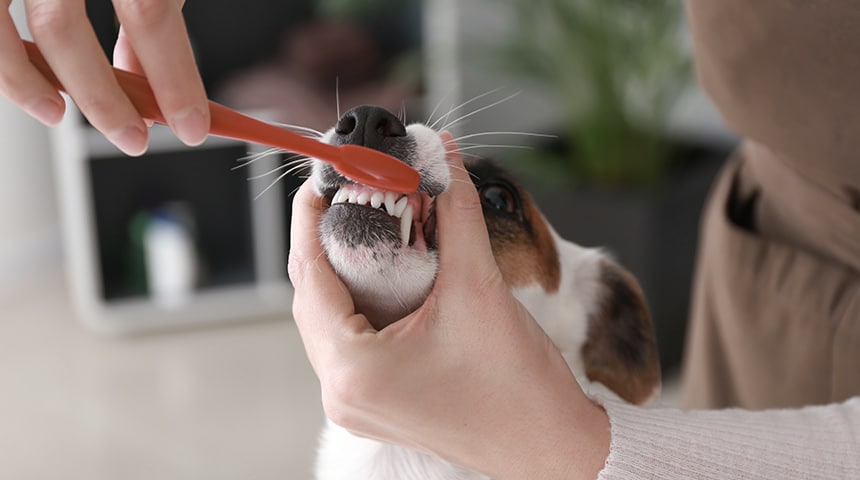
Good dental hygiene is essential to prevent serious health problems. Tartar buildup can lead to gum disease, bad breath, and even tooth loss. Poor dental hygiene can also lead to health issues outside the mouth, for instance, kidney infections and resistance to insulin. By brushing your dog’s teeth regularly, you’re helping to avoid these issues and keeping them healthy.
It's best to introduce tooth brushing and mouth handling when your dog is young, but you can start at any age. The most important thing is to make toothbrushing a positive, stress-free experience for both you and your dog—frequent rewards and patience go a long way!
Four steps to help kick-start a new habit:
1. Use pet-friendly toothpaste
Before you start brushing, remember that human toothpaste can be harmful to your dog, as it may contain toxic ingredients. Always use a toothpaste made specifically for pets. Luckily, many pet-friendly toothpastes come in tasty flavors like chicken, beef, or even vanilla, which your dog will likely enjoy! Start by applying a small amount of the toothpaste to your finger and letting your dog taste it. Repeat this step over several days to help them get accustomed to both the flavor and texture. The goal is to make toothbrushing a positive experience from the start!
2. Start a new habit
Once your dog is comfortable with the taste of the toothpaste, it's time to start handling their mouth. Since it can feel odd for a dog to have someone playing around in their mouth, take it slow and be gentle. Place a little toothpaste on your finger, gently lift your dog’s lips, and apply it to their teeth. This helps them get used to the feeling of you handling their mouth. If your dog seems stressed or impatient, take a break and try again later—patience is key! Remember, frequent rewards throughout the process will keep the experience positive for your dog.
3. Introduce the toothbrush
Next, introduce the toothbrush. Begin by brushing only the canines (the large teeth in the front of the mouth), using a pet-safe toothbrush and a small amount of toothpaste.
Brush gently, moving up and down along the gums and teeth. Keep the session short and positive, offering praise and treats. This will help your dog associate tooth brushing with rewards. As your dog gets more comfortable, you can gradually expand to other areas of the mouth
4. It’s time for a full brushing and a new daily habit!
Now that your dog is familiar with the toothbrush, you can start brushing all of their teeth. Start with the canines again, then slowly work your way toward the back teeth. Keep the sessions gentle and relaxed, ensuring your dog is comfortable. The goal is to make this part of your daily routine, as brushing your dog's teeth every day is ideal for preventing dental issues. For a step-by-step video guide, click here: Dental Care Video.