




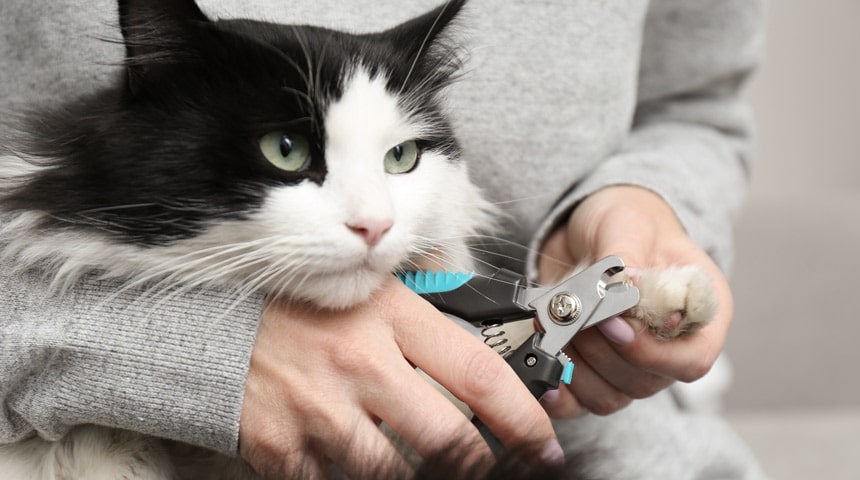
Scratched floors, damaged furniture, and those pesky little scrapes from your fur baby's claws... It might be time for a trim! While it can be a bit tricky, these 6 tips will make the process easier and stress-free for both you and your pet.
Get Them Used to It Early
The best time to start trimming your cat’s claws is during their learning phase, while they’re still kittens. This helps them get used to it quickly and makes handling easier as they grow. If your cat is no longer a kitten, don’t worry – it’s still possible! Just take it slow, one step at a time. Start by gently handling their paws and claws during calm moments, like nap time, meals, or playtime. Gradually introduce the nail clippers, beginning with trimming one claw at a time, and soon you’ll be able to trim all of them in one session.
Stay Calm
Your cat can pick up on your emotions, so it’s important to stay calm and relaxed. Choose a quiet time to trim their claws and avoid showing any signs of stress—your anxiety can make them anxious too. During the process, speak softly to your cat and offer plenty of praise. Positive reinforcement, like a calm voice or a treat, will help them associate nail trimming with something positive.
Guillotine or Nail Clippers: Which to Choose?
For most pet owners, nail clippers are the better option. Guillotine-style clippers require more precision and care to position the claw correctly between the blades, which can be tricky. Nail clippers, on the other hand, allow you to control the claw without the risk of cutting too deeply. They also have a spring mechanism to keep the clipper open, making the process smoother and more efficient.
Know Where to Cut
A cat’s claw has two parts: dead keratin (the outer part) and live keratin (the inner part, which contains nerves and blood vessels). You never want to cut into the live part, as it can cause pain and bleeding. If your cat has white claws, you can easily see the difference—the living part will appear pink. For black claws, you’ll need to be extra cautious and trim a little at a time, looking for a subtle change in texture and color as you get closer to the quick.
Filing the Claws
Once you’ve finished trimming, you can file the claws to smooth out any sharp edges. While this step isn’t necessary, it can help prevent your cat’s freshly trimmed claws from snagging on your clothes or scratching you unintentionally.
Reward Good Behavior
Remember, the process isn’t exactly fun for your cat, so be sure to reward them for their good behavior. Offer a small treat or some extra affection afterward to help create a positive association with nail trimming, making future sessions easier for both of you!