Ophthalmology

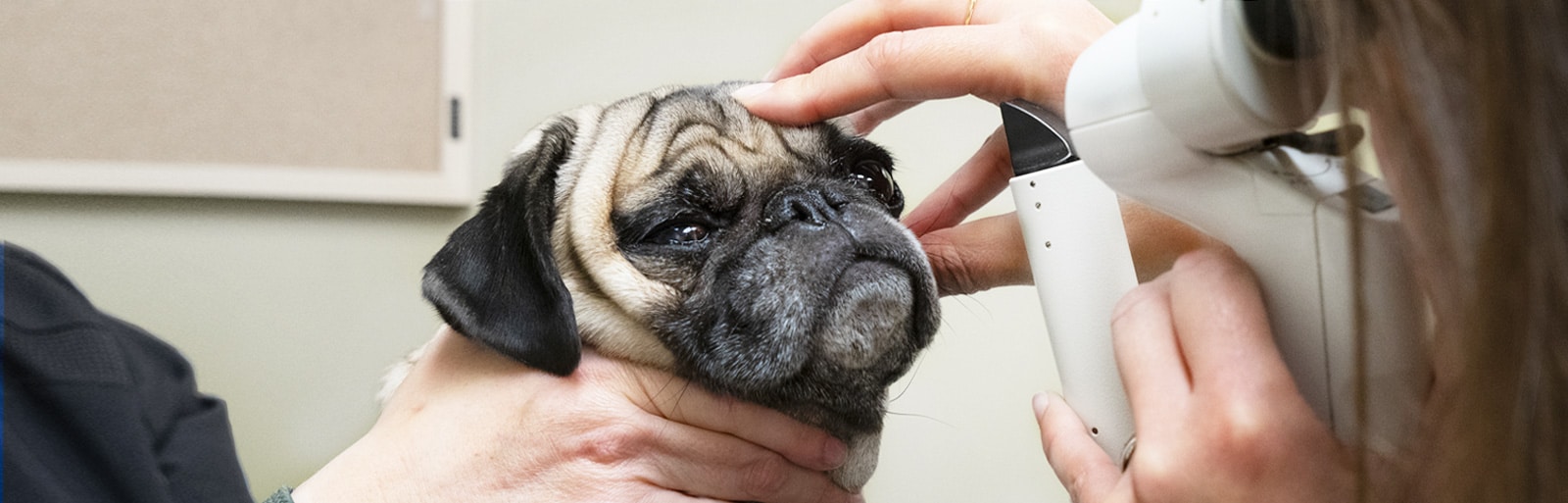
Why consult in ophthalmology?

Your pet should be seen by one of our ophthalmology clinicians if they present:

  • A change in the appearance of their eye
  • Abnormal redness
  • Abnormal flow
  • Loss or decrease in vision

Frequently asked questions

When should I consult a veterinary ophthalmologist for my pet?

A consultation may be recommended if your pet experiences persistent redness, abnormal discharge, changes in the appearance of the eye, signs of pain, or decreased vision. Some eye conditions can progress rapidly, so it is important not to delay seeking veterinary care when you notice any changes. 

What conditions can be treated by the ophthalmology department

Our team can evaluate and treat a wide range of conditions affecting the eyes and vision, including corneal ulcers, glaucoma, cataracts, retinal diseases, and various types of ocular inflammation or abnormalities. 

What tests may be performed during an ophthalmology consultation

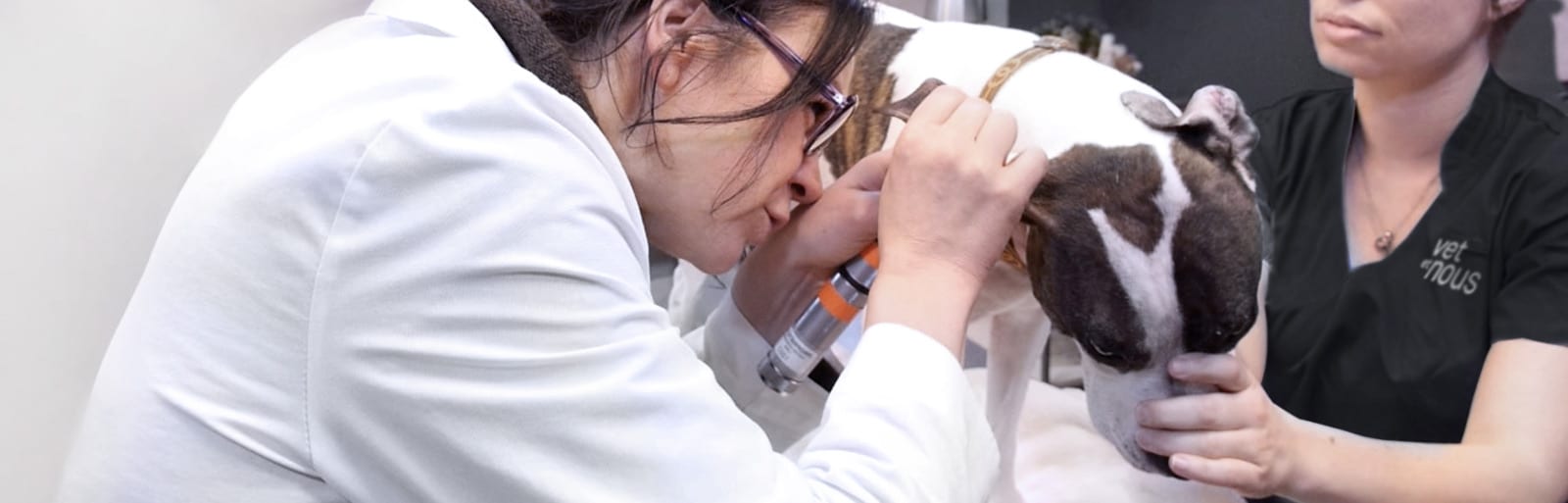
Depending on your pet’s condition, various tests may be recommended, such as tear production testing, tonometry to measure intraocular pressure, fluorescein staining, ocular ultrasound, or electroretinography. 

Can eye surgeries be performed

Yes. Depending on your pet’s diagnosis and individual needs, various ophthalmic surgical procedures may be recommended. 

Cardiology

Why Consult in Cardiology?

Your veterinarian may recommend evaluation by a veterinary cardiologist to investigate the following signs: 

  • Arrhythmia
  • Heart murmur
  • Coughing
  • Rapid breathing at rest
  • Fainting or weakness events
  • Exercise intolerance
  • Abdominal, thoracic or pericardial fluid (effusion)

The purpose of the cardiology consultation is to evaluate the presence and severity of heart Disease, and determine whether the symptoms prompting the consultation are related to heart disease. 

What signs may indicate a heart problem in my pet?

Coughing, rapid breathing at rest, exercise intolerance, episodes of weakness or loss of consciousness, as well as a heart murmur or arrhythmia detected by your veterinarian, may warrant a cardiology evaluation. 

What can a cardiology consultation determine?

A cardiology consultation helps assess the presence and severity of heart disease and determine whether your pet’s symptoms are related to a cardiac condition. 

What cardiac tests may be performed?

Depending on your pet’s needs, an echocardiogram, electrocardiogram (ECG), chest X-rays, or extended cardiac monitoring using a Holter monitor may be recommended. 

Does a pet with a heart murmur always require treatment?

Not necessarily. Heart murmurs can have different causes and varying degrees of severity. An evaluation helps determine whether heart disease is present and whether monitoring or treatment is necessary. 

Oncology

Why consult in oncology?

When we suspect cancer, the first step is to establish an accurate diagnosis and determine the extent of the disease. Cancer leads to the death of 50% of dogs and cats over 10 years old.

Our veterinary oncologists are there to guide you through the various possible treatments.

Our priority: ensuring a good quality of life for your pet by minimizing the appearance of side effects.

What happens when cancer is suspected in my pet?

The first step generally involves obtaining an accurate diagnosis and determining the extent of the disease. This information allows the veterinary team to discuss the available treatment options and choose an approach tailored to your pet. 

What are the goals of veterinary oncology treatments?

The goal is to treat the disease while placing great importance on your pet’s comfort and quality of life. The treatment plan is tailored to their diagnosis, overall health, and individual circumstances. 

Does chemotherapy affect animals the same way it affects humans?

Veterinary chemotherapy protocols are designed with particular attention to quality of life. Potential side effects are closely monitored, and treatments can be adjusted based on each patient’s response. 

What should I do if I discover a lump on my pet?

A lump is not necessarily cancerous, but it is recommended to have it evaluated by a veterinarian. Sampling or additional diagnostic tests may be necessary to determine its nature. 

Neurology

Why consult in neurology?

Your pet should be seen by one of our neurology specialists in case of:

  • Balance disorder
  • Paralysis of the face, jaws, or limb
  • Infections or inflammation
  • Epileptiform seizures
  • Vertebral fractures or tumours
  • Difficulty swallowing, etc.

Frequently asked questions

What symptoms may require a neurology consultation?

Seizures, loss of balance, abnormal gait, weakness or paralysis, significant back or neck pain, facial paralysis, or difficulty swallowing may be associated with a neurological condition. 

Which parts of the body are addressed by veterinary neurology?

Veterinary neurology primarily focuses on the brain, spinal cord, nerves, and muscles, as well as diseases that may affect their function. 

What diagnostic tests may be necessary?

Depending on the symptoms, the team may recommend an MRI, CT scan, cerebrospinal fluid analysis, electromyography, or various laboratory tests. 

Can nourological conditions require surgery?

Yes. Certain conditions, such as some herniated discs, congenital abnormalities, fractures, or tumors, may require surgical intervention. 

Internal Medicine

Why consult in internal medicine?

Your pet should be seen by one of our internal medicine specialists in case of:

  • Weight loss, diarrhea, vomiting, regurgitation, difficulty swallowing
  • Urinary disorders
  • Coagulation disorders, bleeding, anemia
  • Weakness, lethargy, despondency
  • Breathing difficulties, coughing, sneezing, runny nose, exercise intolerance, etc.

Frequently asked questions

What is veterinary internal medicine?

Veterinary internal medicine focuses on complex or chronic diseases affecting the body’s various organ systems. It is particularly valuable when a pet experiences persistent symptoms or when establishing a diagnosis is challenging. 

Under what circumstances might my pet be reffered to internal medicine?

A consultation may be recommended for chronic vomiting or diarrhea, unexplained weight loss, urinary disorders, anemia, bleeding, weakness, respiratory problems, or other persistent symptoms. 

What diagnostic tests may be performed?

Depending on the condition, laboratory tests, diagnostic imaging, endoscopy, or various sampling procedures may be necessary to establish a more precise diagnosis. 

Does internal medicine also treat chronic diseases?

Yes. The team can be involved in the diagnosis, treatment, and long-term monitoring of many chronic or complex diseases. 

Dermatology

Why consult in dermatology?

Your pet should be seen by one of our dermatology specialists if they present:

  • Abnormal hair loss
  • Skin lesions
  • Chronic ear problems
  • Allergy symptoms

Frequently asked questions

When should I consult a veterinary dermatologist?

Abnormal hair loss, persistent itching, skin lesions, recurring infections, chronic ear problems, or allergy-related symptoms may warrant a dermatology consultation. 

My pet is constantly scratching. Does this necessarily mean they have allergies?

No. Itching can have several causes, including allergies, parasites, or certain infections. A thorough investigation helps identify the underlying cause and establish an appropriate treatment plan. 

What tests may be performed in dermatology?

Depending on the condition, allergy testing, skin biopsies, skin or ear cytology, skin scrapings, cultures, or specialized blood tests may be recommended. 

Can chronic ear infections be related to a dermatological condition?

Yes. Recurring ear problems may be associated with allergies or certain skin diseases. Further investigation can help identify the underlying cause. 

Specialized Surgery

Why consult in specialized surgery?

Your pet should be seen by one of our surgical specialists when:

  • The additional expertise of a surgeon is required for the treatment of your companion ;
  • The diagnosis made by your general veterinarian is  inconclusive and examination by a surgery specialist is necessary ;
  • Your pet's condition is not improving

Frequently asked questions

Why is my veterinarian recommending a consultation with a specialized surgery team?

Certain procedures require specialized expertise, techniques, or equipment. A consultation allows the team to assess your pet’s condition and determine the most appropriate surgical approach. 

What types of conditions may require specialized surgery?

These may include certain fractures or orthopedic injuries, joint problems, masses, soft tissue conditions, or other conditions requiring complex surgical procedures. 

Does a surgical consultation automatically mean my pet will undergo surgery?

No. The consultation is primarily intended to evaluate your pet, review their medical history, and discuss the available options. Surgery will only be recommended if it is considered an appropriate treatment for their condition. 

What happens after surgery?

You will receive detailed instructions regarding medications, rest, wound care, nutrition, physical activity, and any necessary follow-up appointments. 

Birds and Exotic Pets

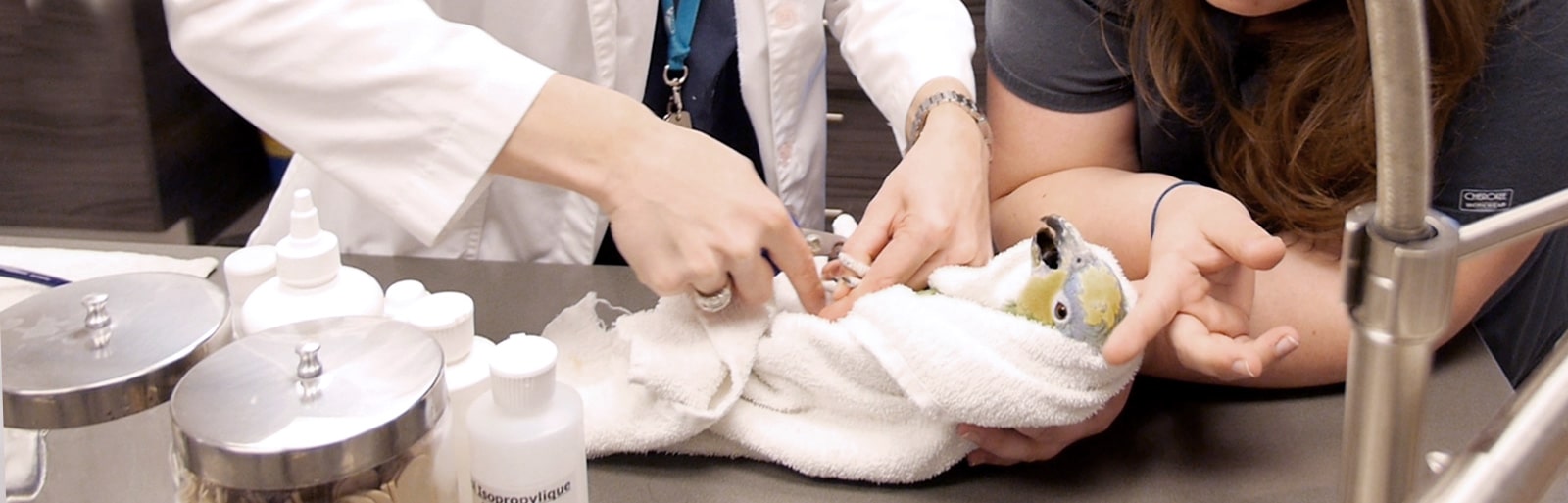
Our team at Centre Vétérinaire Laval is specializing in birds and exotic animals is always ready to welcome you, whether you are referred by your family veterinarian or when your animal has an accident. Thanks to our state-of-the-art equipment, the expertise of our veterinarians and the hard work of our animal health technicians, we remain available to take care of your animal as if it were our own.

My pet is sick…but is it an emergency? Read our useful guide to recognize the signs of illness in your exotic pet and know when to consult in emergency.

Please note that the specialty department is open from 9 a.m. to 6 p.m., Monday through Friday. Our team of general practice veterinarians is available 24/7 to stabilize emergencies.

Our team accommodates most exotic animals:

  • Birds
  • Small mammals
    • Rabbits
    • Ferrets
    • Hedgehogs
    • Rodents
    • Sugar gliders
    • Etc.
  • Reptiles

Frequently asked questions

Why should I consult a veterinarian with expertise in exotic animals?

Birds, reptiles, and small mammals have physiological, nutritional, and environmental needs that differ significantly from those of dogs and cats. Species-specific expertise allows for a more accurate assessment of their health. 

Do exotic animals hide their symptoms when they are sick?

Many species may show very subtle signs of illness. Changes in appetite, behavior, breathing, stool, activity level, or weight can therefore be significant and warrant a veterinary consultation. 

Do you offer preventive care for exotic animals?

Yes. A physical examination allows the veterinarian to assess the animal’s overall health, as well as their diet, environment, and living conditions, which are particularly important for exotic species. 

Can I seek emergency care for an exotic animal?

Yes. The specialized team at Centre Vétérinaire Laval can see exotic animals through referrals or for emergencies. The specialty department is open Monday to Friday, from 9 a.m. to 6 p.m., while a team of general practice veterinarians is available 24/7 to stabilize emergency patients.